





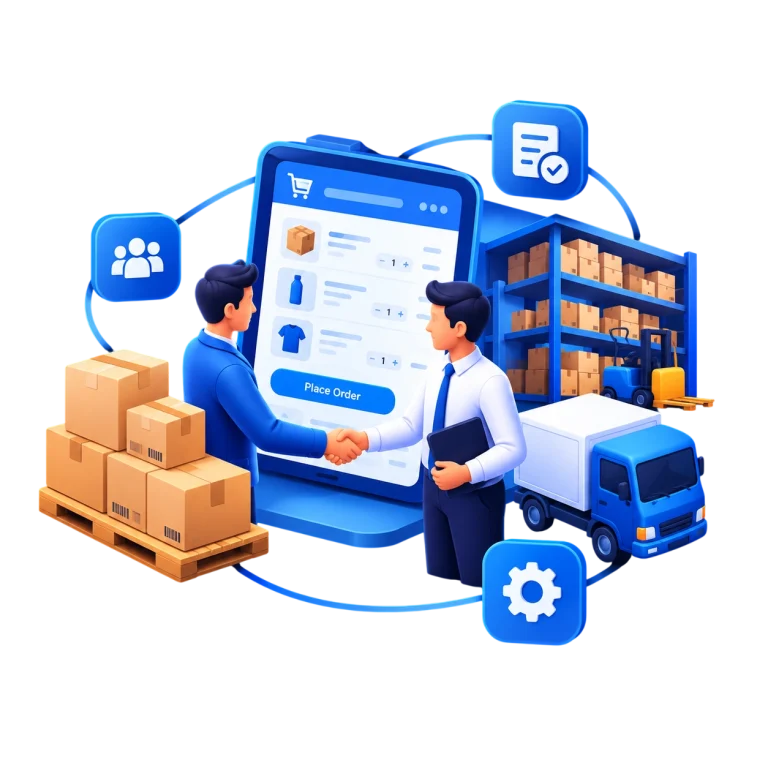
B2B order management looks nothing like ordering on a typical consumer storefront. A wholesale buyer isn’t just adding an item to a cart — they’re navigating negotiated pricing, customer-specific catalogs, bulk quantities, internal approval chains, and repeat purchasing built around long-term contracts. Traditional ecommerce platforms are built for one person buying one thing at one price. B2B buying involves multiple stakeholders, custom pricing tiers, and purchasing rules that differ from account to account, which is exactly why so many growing ecommerce businesses hit friction as their wholesale and distributor relationships scale.
What Is B2B Order Management?
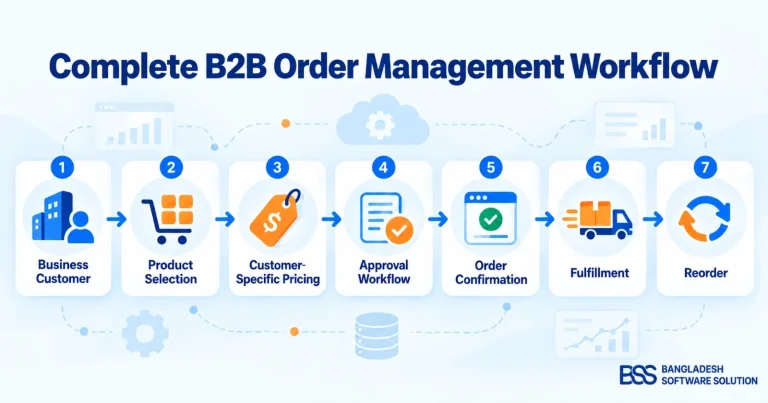
A modern B2B order management system manages the complete business purchasing lifecycle — from the moment a business customer logs in, through pricing and approvals, to fulfillment and the next reorder. Instead of handling each of these steps manually across emails, spreadsheets, and phone calls, an order management platform centralizes:
- Order processing and status tracking
- Customer-specific pricing rules
- Buyer accounts and permissions
- Multi-step approval routing
- Fulfillment coordination with existing systems
Meanwhile, product roadmaps do not pause. A flexible dedicated development team changes this equation: instead of waiting through a full hiring cycle, a Canadian business can define its goals, onboard a development team, and begin building within weeks. This model does not replace strategic leadership — it removes the bottleneck between a validated idea and a working product, while leaving product direction firmly with the Canadian business.
Why Traditional B2B Ordering Becomes Difficult
As order volume and customer count grow, manual processes stop scaling. Buyers increasingly expect the same self-service speed they get as consumers — roughly 61% of B2B buyers say they would rather manage their own orders online than go through a sales rep — yet many B2B storefronts still route every order through manual review.
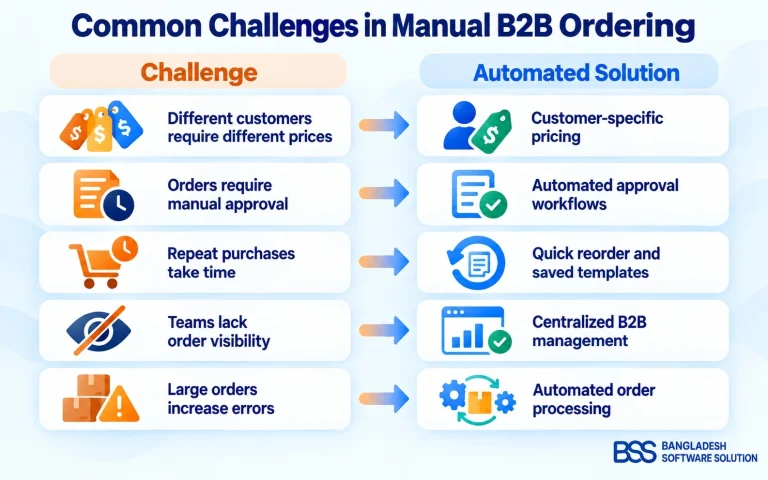
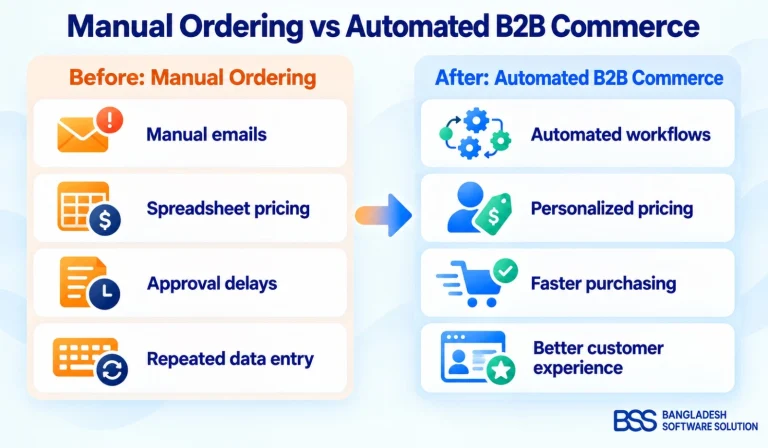
Table 1: B2B Order Management vs Traditional Purchase Order Processing
| Traditional | Automated B2B System |
|---|---|
Manual emails | Digital ordering portal |
Spreadsheet pricing | Customer-specific pricing |
Manual approvals | Automated workflows |
Repeated data entry | Saved templates |
Types of B2B Ordering Models
B2B businesses follow different purchasing models depending on their customers, order volume, and operational needs. A flexible B2B order management system helps businesses support these workflows efficiently.
Wholesale Ordering: Retailers and resellers purchase products in bulk with negotiated pricing, minimum quantities, and repeat ordering requirements.
Distributor Ordering: Distributors manage multiple suppliers and buyers while requiring accurate pricing, inventory visibility, and faster reorder processes.
Manufacturer Direct Ordering: Manufacturers sell directly to businesses with custom pricing, product configurations, and structured purchasing workflows.
Procurement-Based Ordering: Large organizations use approval-based purchasing where orders require review, budget control, and authorization.
Repeat and Corporate Ordering: Businesses with recurring purchases or multiple locations need saved templates, buyer permissions, and centralized order management.
Supporting these ordering models allows ecommerce businesses to handle complex B2B transactions while reducing manual work and improving customer experiences.
How Canadian Businesses Can Work Successfully With Offshore Development Teams
Customer-specific pricing. Wholesale relationships rarely use one price list. A capable B2B order management software platform supports contract pricing, wholesale pricing rules, and distinct customer groups, so each account sees only the terms negotiated for them.
Automated order approval workflow. A buyer places an order, a manager reviews it against budget or authority limits, and only then does it move to fulfillment. Automating this purchase approval process removes the email back-and-forth that slows down large accounts.
Bulk ordering and quick reorder. Distributors, retailers, and manufacturers place the same core products repeatedly. Saved order templates and one-click reordering turn a recurring purchase into a two-minute task instead of a rebuilt cart every time.
B2B customer self-service portal. A B2B customer portal lets buyers view order history, reorder past purchases, and manage their own purchasing independently — without waiting on a sales rep for routine transactions.
Benefits of B2B Order Management Automation
The cost of staying manual is measurable. Manual order handling can run an estimated USD 50 to USD 150 per order, compared with roughly USD 25 per order once self-service ecommerce is in place, and a large share of B2B purchases still stall somewhere in the buying process before they’re completed. Moving from manual to automated order management directly addresses both problems.
B2B Order Management Can Integrate With Existing Systems
Many growing businesses already use ERP, CRM, inventory, or accounting systems to manage operations. A modern B2B order management solution can integrate with these platforms to synchronize product information, inventory availability, customer data, and order updates. This helps businesses reduce manual work and maintain accurate information across their systems as they scale.
Why nopCommerce Stores Need Dedicated B2B Management Features
nopCommerce provides a flexible, open-source ecommerce foundation, but out of the box it isn’t built for wholesale complexity. Businesses running B2B operations on nopCommerce typically need to add wholesale pricing, customer groups, product visibility rules, approval systems, bulk purchasing, and repeat ordering on top of the core platform.
For nopCommerce merchants facing these challenges, adding dedicated B2B capabilities can remove many of these limitations. This is exactly the gap the BSS B2B Management Plugin for nopCommerce is built to close. The plugin brings customer-specific pricing, product access management, approval workflows, bulk ordering support, and order templates directly into an existing nopCommerce store — giving merchants a nopCommerce B2B management solution that can automate B2B ordering workflows without a platform migration.
Building Better B2B Ecommerce Experiences With Bangladesh Software Solution
Beyond the plugin itself, Bangladesh Software Solution works with merchants on the broader technical side of B2B ecommerce — including nopCommerce customization, integrations, and scaling stores as order volume and customer complexity grow. Real-world projects such as the case of Ola Sportswear, a European sportswear company, demonstrate how BSS helps businesses build B2B-ready ecommerce platforms with wholesale workflows, multi-currency support, ERP integration, and scalable infrastructure.
For businesses that need more than an out-of-the-box plugin, the team’s custom ecommerce development services cover everything from custom pricing logic to full storefront builds, making Bangladesh Software Solution a practical B2B ecommerce development partner for merchants building scalable ecommerce solutions around nopCommerce.
Why Businesses Choose a B2B Management Solution
A dedicated B2B order management setup pays off in a few concrete ways:
Less manual work
pricing, approvals, and reordering run without constant staff intervention
Better customer experience
buyers self-serve instead of waiting on email replies
Room to scale
new wholesale accounts and larger order volumes don’t require proportionally more staff
Faster order processing
orders move from cart to fulfillment without manual bottlenecks
For a nopCommerce store already handling wholesale or distributor accounts, the B2B Management Plugin for nopCommerce is the direct way to bring these capabilities in without rebuilding the storefront.
Frequently Asked Questions
What is B2B order management?
B2B order management is the process of handling business-to-business purchases — including customer-specific pricing, approvals, bulk ordering, and repeat purchasing — from order placement through fulfillment.
How does B2B order management software work?
It centralizes pricing rules, buyer accounts, approval routing, and order tracking in one system, replacing manual emails and spreadsheets with automated workflows.
Why do wholesale businesses need automated ordering?
Wholesale accounts place large, recurring orders under negotiated terms. Automation keeps pricing accurate, speeds up approvals, and reduces the manual errors that come with high order volumes.
Can nopCommerce support B2B ecommerce?
Yes, with the right extensions. nopCommerce’s core platform handles general ecommerce well, and plugins such as the BSS B2B Management Plugin add the pricing, approval, and access-control features wholesale businesses need.
What features should a B2B ordering system have?
At minimum: customer-specific pricing, approval workflows, bulk ordering, quick reorder or saved templates, and a self-service customer portal.
Can B2B order management integrate with ERP systems?
Yes. B2B order management solutions can integrate with ERP, inventory, and accounting systems to synchronize customer data, product availability, and order information.