





Furniture shopping online is fundamentally different from buying a phone case or a T-shirt. When someone visits a furniture ecommerce website, they are trying to picture how a sofa will feel in their living room, whether a dining table will fit their space, and whether the wood finish shown on screen matches what will actually arrive at their door. Unlike most retail categories, furniture is bulky, expensive, and deeply personal — buyers cannot pick it up, sit on it, or check the stitching in person before paying. That missing physical connection creates hesitation. For furniture businesses, the website itself has to do the work a showroom floor once did: build trust, answer questions, and give shoppers the confidence to click “buy” on a big-ticket item they have only ever seen in pixels.
Why Furniture Businesses Need More Than a Basic Online Store
A simple product catalogue with a few photos and an “Add to Cart” button might work for small accessories, but it falls short for furniture. Modern buyers expect a genuine furniture shopping experience — one that lets them browse comfortably, understand exactly what they are getting, and feel assured before they commit. That means high-quality product presentation from multiple angles, easy browsing with clear categories, complete product details such as dimensions and materials, real visual confidence, and a checkout process that does not add friction at the last step. A furniture online store that behaves like any other ecommerce website for furniture business owners who have not thought beyond the basics will struggle to convert visitors, no matter how good the products themselves are.
Essential Features of a High-Converting Furniture Ecommerce Website
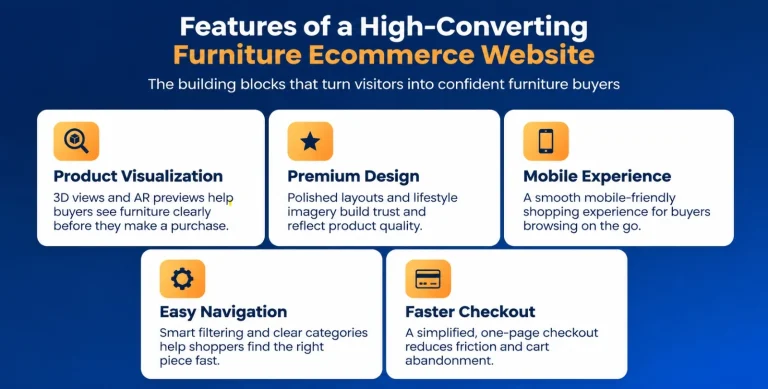
Certain features consistently separate furniture stores that convert from those that do not:
- Premium product presentation: Clean, well-lit imagery signals quality and professionalism from the very first click.
- Advanced product galleries: Multiple angles and zoom options let shoppers inspect details as if they were in-store.
- 3D product visualization: Rotating a piece on screen helps buyers judge proportions, scale, and craftsmanship.
- Augmented reality experience: AR lets customers preview furniture inside their own space using a phone camera.
- Product filtering: Filters by size, material, price, and style help shoppers find the right piece quickly.
- Mobile-friendly shopping: With so much browsing happening on phones, a smooth mobile experience is essential.
- Faster checkout: Fewer steps between “I want this” and “it’s ordered” means fewer abandoned carts.
Each of these plays a business role, not just a technical one — together they shape how confident a customer feels before they ever reach for their card.
How Visualization Helps Customers Buy Furniture Online With Confidence
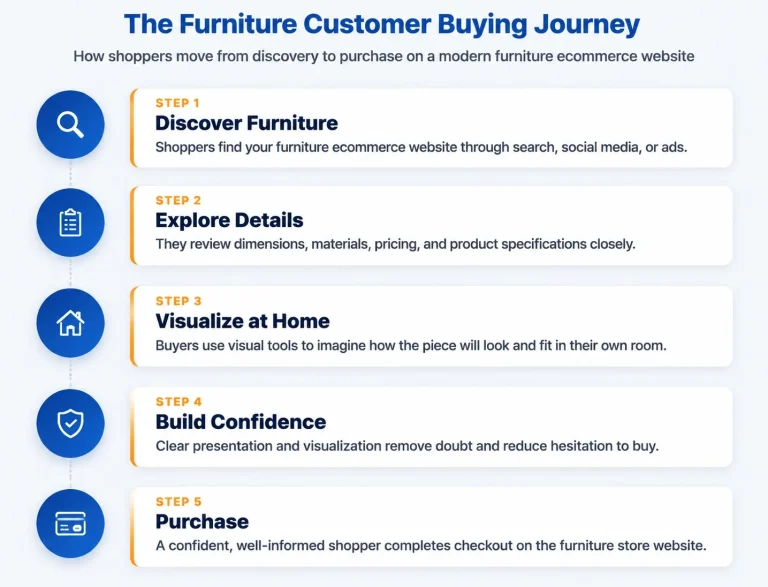
Furniture buyers hesitate for practical reasons: Will this sofa fit my living room? Will this dining table clash with my flooring? How will this rug actually look once it is installed? These are the questions that stall a sale. Visualization tools answer them directly. A 360° product view lets shoppers examine a piece from every side, the way they would walking around it in a showroom. An AR preview overlays the actual product, at true scale, inside a customer’s own room using their phone camera. Floor and room visualization goes a step further, showing how flooring or larger furniture pieces will look once installed. Tools like these, found in solutions such as the NopFurniture Theme by Bangladesh Software Solution, bundle visualization directly into a furniture ecommerce website, so buyers get the reassurance they need without ever leaving the product page.

Furniture Website Design: Turning Your Store Into a Digital Showroom
A furniture website should not feel like a spreadsheet of products with prices attached. Strong furniture website design borrows from real showrooms: spacious layouts, lifestyle photography that shows pieces styled in real rooms, and a visual narrative that reflects the brand’s quality. Consistent visual branding — colors, typography, and imagery used the same way across every page — builds the same sense of trust a well-designed physical showroom does. When a digital furniture showroom is built this way, it does more than display products; it shows customers the kind of home they could have, which is often the real reason people buy furniture in the first place.
How a Better Shopping Experience Improves Conversion
Small friction points add up. A Quick View option lets shoppers preview a product without leaving the category page, keeping browsing momentum going. Clear navigation and well-organized categories mean customers spend their time deciding, not searching. Product comparison tools help buyers weigh options side by side, especially useful for higher-priced items like sofas or bedroom sets. And a one-page checkout removes the multi-step forms that so often cause cart abandonment right before a sale closes. None of these features are flashy on their own, but together they make online furniture sales feel effortless rather than effortful — and that ease is frequently what tips a hesitant browser into a buyer.
Common Furniture Ecommerce Website Mistakes
Many furniture businesses struggle to convert online visitors because their websites do not address the challenges of buying furniture digitally. Common mistakes include:
Table 1: Common Furniture Ecommerce Website Mistakes and Their Impact
| Mistake | Impact |
|---|---|
Poor product images | Reduces customer trust |
Missing dimensions and specifications | Creates purchase hesitation |
Slow mobile experience | Causes visitors to leave |
Complicated checkout process | Increases cart abandonment |
Lack of product visualization | Makes buyers uncertain |
A successful furniture ecommerce website solves these challenges by providing better product presentation, smoother navigation, and tools that help customers make confident purchasing decisions.
Why Furniture Businesses Should Choose a Furniture-Specific Ecommerce Solution
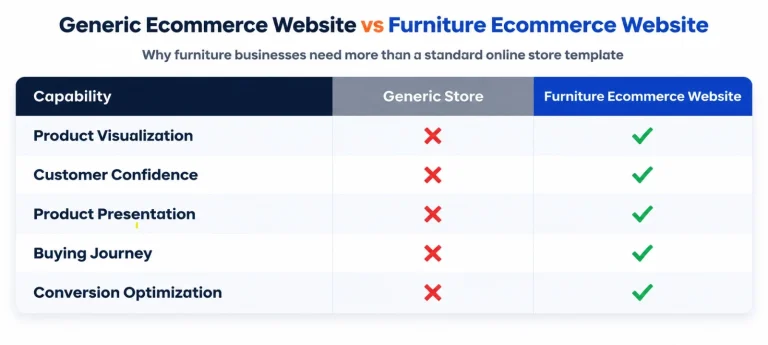
Generic ecommerce templates are built to serve a wide range of products, which means they rarely account for what furniture buyers actually need: visualization, room-fit context, and a slower, more considered buying journey. A furniture ecommerce solution built specifically for this category closes that gap, as the comparison below shows.
Table 2: Generic Ecommerce Website vs Furniture Ecommerce Website
| Capability | Generic Ecommerce Website | Furniture Ecommerce Website |
|---|---|---|
Product Visualization | Static images only | 3D views and AR preview |
Customer Confidence | Limited, based on guesswork | Built through visual proof |
Product Presentation | Generic catalogue layout | Showroom-style presentation |
Buying Journey | One-size-fits-all flow | Designed around furniture buyers |
Conversion Optimization | Basic cart and checkout | Friction-reducing tools throughout |
How NopFurniture Theme Helps Furniture Businesses Build a Better Online Store
Bangladesh Software Solution’s NopFurniture Theme is built specifically for furniture, home decor, flooring, and interior businesses that want their furniture store website to work harder for them. It is a fully responsive ecommerce design, paired with a bundle of 19 plugins that cover the features furniture buyers look for: a 3D Product Viewer and AR visualization for confident buying decisions, a Floor Visualizer for flooring and room-based products, a Theme Builder for layout flexibility without custom development, an AI Visual Editor for faster content updates, Quick View for smoother browsing, and one-page checkout to reduce drop-off at the final step. Rather than stitching together separate tools, furniture businesses get a furniture-specific foundation already built around how their customers shop — which means less setup work and a buying experience designed for the category from day one.
Explore the NopFurniture Theme demo and see how 3D visualization, AR, and furniture-focused ecommerce features can improve your online store experience.
Conclusion
Furniture customers need more than product photos — they need a reason to feel sure about a purchase they cannot physically touch before it arrives. A well-designed furniture ecommerce website closes that gap, turning hesitant browsers into confident buyers through better presentation, visualization, and a smoother path to checkout. For furniture businesses ready to grow online, the right website design is not a nice-to-have — it is the new showroom floor.
Frequently Asked Questions
What features should a furniture ecommerce website have?
A furniture ecommerce website should include high-quality images, 3D product views, AR visualization, detailed product information, smart filters, mobile-friendly design, easy checkout, and secure payments to create a smooth buying experience.
Why is AR important for furniture ecommerce?
AR allows customers to visualize furniture inside their own space before buying. It reduces purchase hesitation and helps shoppers make more confident decisions.
How does 3D visualization improve furniture sales?
3D visualization lets customers explore products from every angle, understand size and design better, and experience a more realistic online shopping journey.
What is the best ecommerce platform for furniture stores?
The best platform depends on business needs, but a furniture ecommerce platform should support customization, large catalogs, advanced features, and integrations like 3D viewers and AR.
How much does it cost to build a furniture ecommerce website?
The cost depends on design complexity, features, integrations, and customization needs. Advanced features like 3D visualization, AR, and custom development increase the overall investment.