


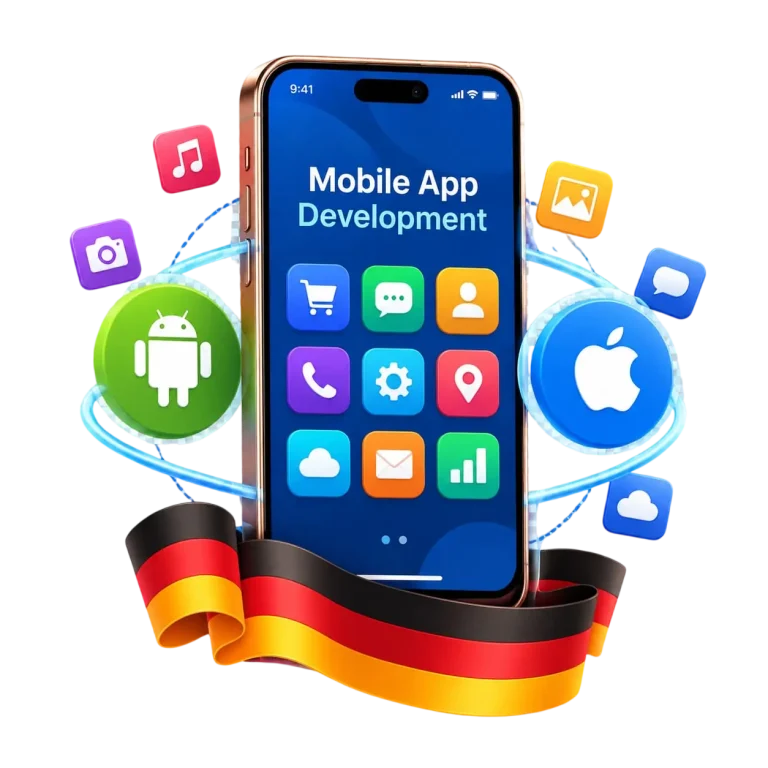
Mobile apps have become an important digital channel for German businesses looking to improve customer experience, increase retention, and connect their existing systems. Consumers increasingly expect instant, personalised experiences on their smartphones rather than navigating a desktop website from start to finish. This change in behaviour means a well-designed website alone is no longer enough — companies need connected digital experiences that follow the customer from browsing to checkout to after-sales support. As mobile usage grows, so does the responsibility that comes with it: apps must be secure, GDPR compliant, and able to integrate smoothly with existing business systems through modern APIs. For business owners exploring mobile app development in Germany, understanding the process, the cost drivers, and the compliance requirements is the first step toward building an app customers trust.
Why Mobile Apps Are Becoming Essential for German Businesses

German consumers spend a growing share of their online time on mobile devices, and that habit is reshaping expectations across every industry. A mobile app gives a business a direct, always-available channel to reach customers — no browser tabs, no searching, just one tap away. This proximity supports stronger engagement, easier repeat purchases, and more consistent brand visibility. Mobile apps also open the door to push notifications and offline functionality that a website cannot easily replicate, features that matter when a business is trying to build loyalty rather than chase one-off transactions.
Key Fact
In 2025, 78% of EU internet users bought or ordered goods or services online, up from 62% in 2015 — a clear signal that digital and mobile-first buying habits are now the norm rather than the exception.
Beyond customer-facing benefits, mobile apps support internal efficiency. Push notifications keep customers informed about orders, promotions, or service updates without relying on email open rates. Loyalty features, saved preferences, and one-click reordering increase retention because returning is simply easier. On the operational side, apps can automate parts of the sales and support process — order confirmations, real-time inventory checks, appointment reminders — reducing manual work for staff. Together, these advantages explain why more German SMEs, retailers, and B2B service providers are treating business mobile apps as infrastructure rather than an optional extra.
Why Modern Mobile Apps Need API Integration
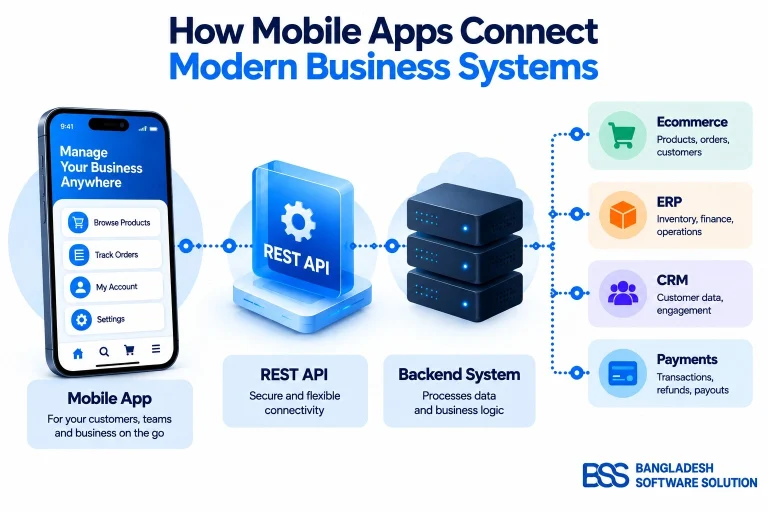
A mobile app rarely works well in isolation. To be genuinely useful, it needs to communicate with the systems a business already relies on — its online store, inventory records, customer data, and payment processing. Rather than duplicating data entry or creating disconnected silos, a well-built app acts as another interface into one connected business, pulling live product information, order status, and account details from the backend in real time. This is where API integration becomes central to the conversation.
Mobile App Opportunities Across German Industries
Mobile app opportunities look different across sectors. The table below summarises common use cases business owners in different industries typically consider first.
Table 1: Different industries have different mobile app opportunities.
| Industry | Mobile App Opportunities |
|---|---|
Ecommerce | Mobile storefronts, wishlists, one-tap checkout, order tracking |
Retail | Loyalty apps, in-store scan-and-go, personalised push offers |
Healthcare | Appointment booking, secure patient communication, reminders |
Manufacturing | Field service tools, equipment monitoring, digital work orders |
Logistics | Shipment tracking, driver apps, route optimisation |
B2B services | Client portals, quote requests, account self-service |
Technologies Used in Modern Mobile App Development
Flutter App Development
Flutter has become a practical choice for German businesses that want to reach both Android and iOS users without maintaining two separate codebases. Because Flutter apps are built from a single codebase, development cycles are typically faster and ongoing maintenance is simpler — a meaningful advantage for SMEs balancing budget against functionality. The framework also supports rich, native-feeling interfaces, which matters for customer-facing apps where user experience directly affects conversion and retention.

API Development and REST API Integration
APIs are what allow a mobile app to function as part of a larger business system rather than a standalone product. A REST API defines a standard, secure way for the app to request and send data — checking stock levels, retrieving a customer’s order history, or submitting a new order for processing. For an ecommerce business, this means product prices and availability shown in the app stay synchronised with the online store automatically, without manual updates on either side. Customer accounts, cart contents, and order status can all be shared across web and mobile through the same API layer, giving shoppers a consistent experience regardless of which channel they use. Typical REST API use cases in business apps include product synchronisation between the app and the online store, customer account management with shared login credentials, order management reflecting real-time status, and secure payment processing connected to a payment gateway. Because the API sits between the app and sensitive backend systems, its design also plays a direct role in overall mobile app security.
GDPR Compliance for Mobile Apps in Germany
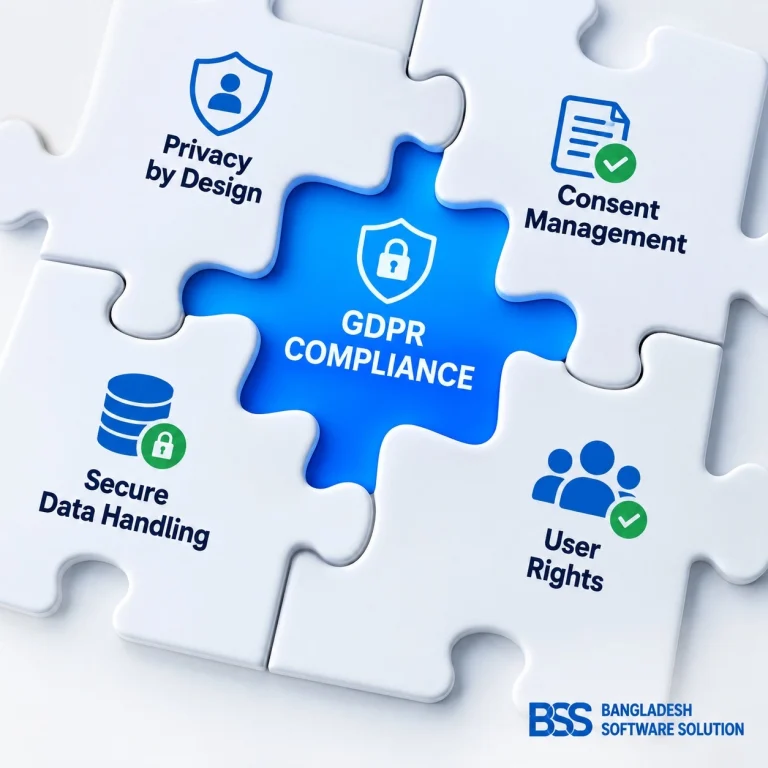
For a German audience, GDPR compliance is not a footnote — it is often the deciding factor in whether a business feels comfortable launching a mobile app at all. The good news is that compliance does not have to slow development down if it is planned for from the start rather than added afterward. A few core principles help business owners have informed conversations with their development partner.
Privacy by Design
Privacy by design means data protection is considered at every stage of development, not bolted on before launch. In practice, this includes collecting only the data an app genuinely needs, limiting internal access to that data, and building safeguards directly into the app’s architecture. Retrofitting privacy protections into a finished app is far more costly and risky than designing with them from day one.
Consent Management
Users need clear, understandable information about what data an app collects, why it is collected, and how it will be used — before they agree to it. Consent should be specific rather than bundled into a single blanket agreement, and users should be able to withdraw it as easily as they gave it. Clear consent flows also build user trust, which directly supports adoption.
Secure Data Handling
Technical safeguards matter as much as policy. Encryption of data in transit and at rest, secure authentication for user accounts, and protected API communication between the app and backend systems all reduce the risk of a data breach. Secure storage on the device itself matters too, particularly for apps handling payment or health-related information.
Good to know
When working with an external development partner, businesses should also establish appropriate agreements such as a Data Processing Agreement (DPA) to define responsibilities for handling personal data.
User Rights
GDPR gives individuals specific rights over their own data, including the right to access the data a company holds about them, request corrections, and ask for their account and associated data to be deleted. A mobile app should make these rights genuinely usable through accessible account settings, not just theoretically available in a lengthy privacy policy.
Good to know
GDPR applies regardless of where a development team is based. What matters legally is where the business operates and where its users are located — so a German company working with an offshore development partner remains fully responsible for the GDPR compliance of the finished app.
Source: Regulation (EU) 2016/679 (General Data Protection Regulation)
Mobile App Development Process
Step 1: Business Analysis
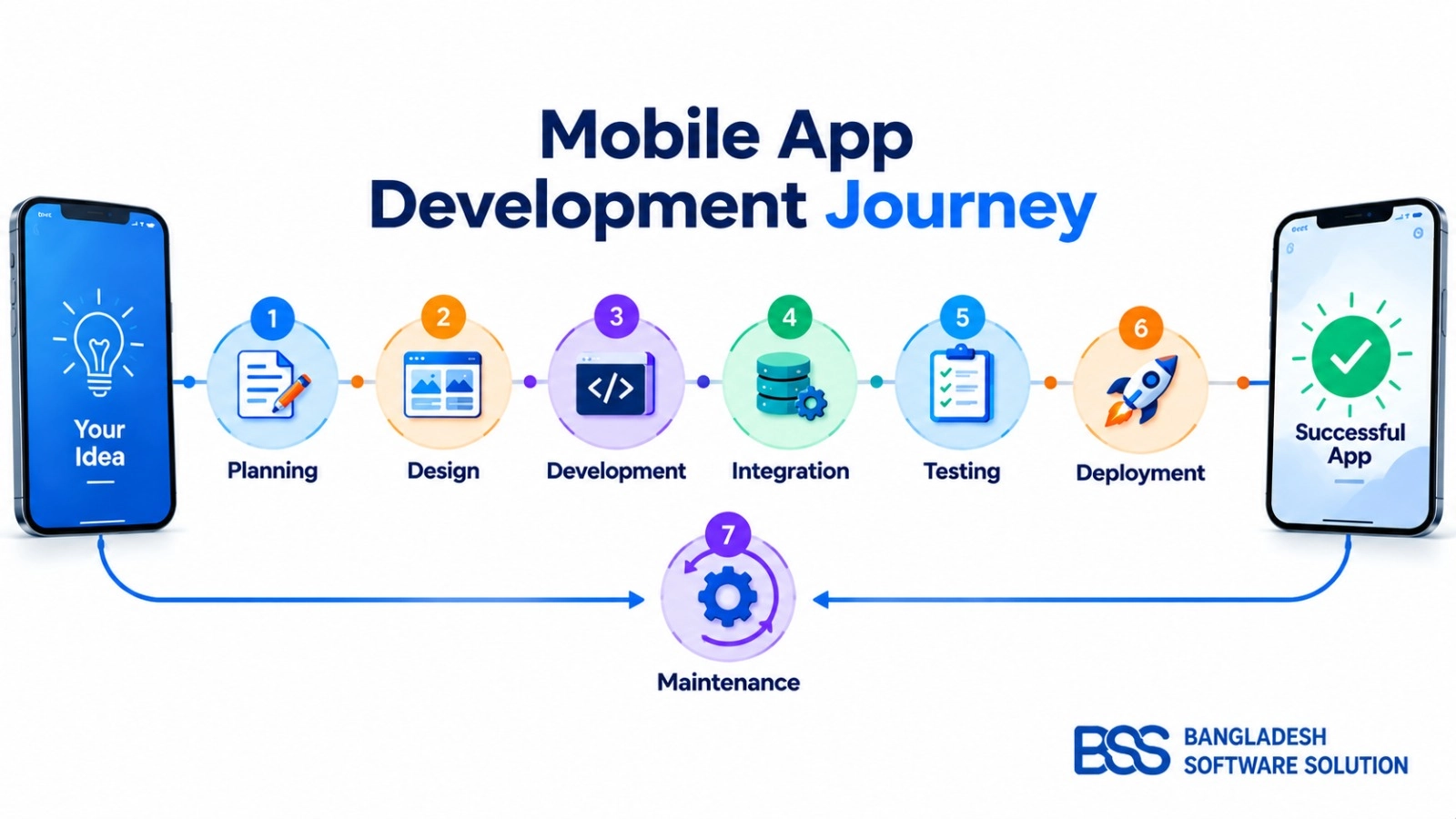
Development begins with understanding business goals, target users, and the systems the app will need to connect to, clarifying priorities before design or code work starts.
Step 2: UI/UX Design
Wireframes and prototypes map out the user journey, with attention to accessibility and ease of use, so the app feels intuitive from the first screen.
Step 3: Development
The app is built, typically using Flutter for the frontend with a REST API layer connecting to backend services and business systems.
Step 4: Integration
The app is connected to existing platforms — e-commerce stores, ERP, CRM, or payment gateways — so data flows automatically rather than requiring manual entry.
Step 5: Testing and Security
Performance, API, and security testing confirm the app behaves reliably under real conditions and that data handling meets GDPR requirements.
Step 6: Deployment and Maintenance
After launch, ongoing updates, monitoring, and improvements keep the app secure, compatible with new OS versions, and aligned with evolving business needs.
How Much Does Mobile App Development Cost in Germany?
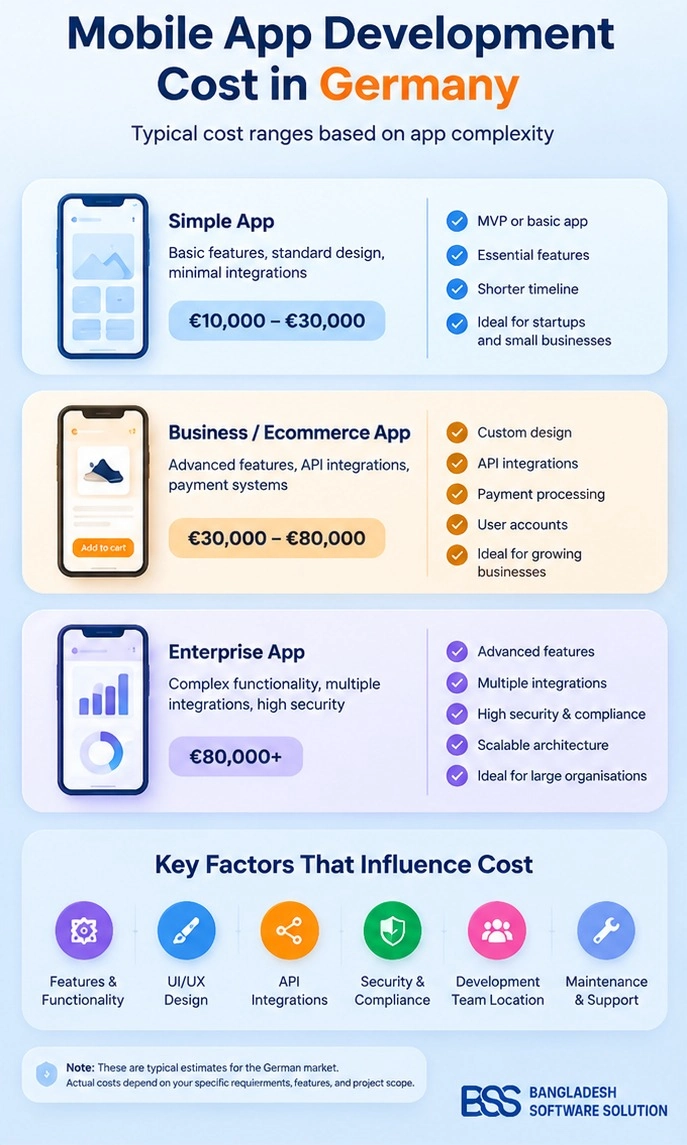
There is no single fixed price for mobile app development, and any provider quoting one without understanding the project should be treated with caution. Cost depends on app complexity, the number of features, backend requirements, the depth of API integration, security requirements, and which platforms — iOS, Android, or both — are targeted. Ongoing maintenance, including updates, monitoring, and support, is a recurring cost that should be planned for from the outset rather than treated as an afterthought.
Table 2: Cost comparison with different apps and timelines
| App Type | Complexity | Expected timelines | Main Cost Factors |
|---|---|---|---|
Simple business app (info, contact, basic booking) | Low | 2–4 months | UI design, basic backend, single platform |
Ecommerce mobile app | Medium–High | 4-8 months | Product sync, REST API integration, payment gateway, user accounts |
Custom enterprise app | High | 6–12+ months | Complex integrations (ERP/CRM), security requirements, scalability |
Typical cost to build a mobile app based on application type:
Basic business app
€10,000–€30,000
Ecommerce app
€30,000–€80,000
Enterprise app
€80,000+
Disclaimer: These are indicative ranges and actual development costs vary according to functionality, platform, UI/UX requirements, backend architecture, integrations, security, compliance, and project scope.
Local Development Company vs Offshore Development Partner
Choosing between a local German agency and an offshore development partner is less about which is inherently better and more about which fits the project’s budget, timeline, and technical needs. Offshore development partners can offer meaningful cost efficiency and access to specialised technical talent, but they work best when paired with clear communication processes and transparent project reporting — the same standards a business would expect locally.
Table 3: Local development company vs. offshore development partner
| Factor | Local Development Company | Offshore Development Partner |
|---|---|---|
Cost | Higher | Generally lower |
Talent availability | Limited to local market | Broader access to specialised skills |
Scalability | Constrained by local hiring capacity | Often easier to scale teams up or down |
Communication | In-person, same time zone | Requires structured remote processes |
Technical expertise | Varies by agency | Can span multiple technology specialisations |
Read our blog Offshore Development vs Local Hiring: Why Startups Choose Offshore Teams to figure out which model is more suitd for your business.
How Bangladesh Software Solution Helps Businesses Build Mobile Applications
Bangladesh Software Solution works with businesses that want a mobile app built on solid technical foundations rather than shortcuts. The team’s services span mobile application development, Flutter development, API and REST API integration, ecommerce mobile solutions, custom software development, and QA testing — supporting a project from initial planning through to long-term maintenance. For German businesses evaluating an offshore development partner, this means one team can handle both the mobile app itself and the integrations that connect it to existing ecommerce, ERP, or CRM systems.
Solution Showcase: Transform Ecommerce Stores Into Mobile Shopping Experiences
For ecommerce businesses that already run an online store, the BSS Nop Mobile App with REST API offers a practical way to extend that store into a native mobile experience without rebuilding it from scratch. The app connects to the existing store through REST API, so product catalogues, customer accounts, and order data stay synchronised automatically. Customers can browse products, manage their accounts, add items to a cart, complete checkout, and track orders directly from their phone, while the business continues managing everything from the same backend it already uses.
Case Study: Building a Scalable Ecommerce Foundation for Future Mobile Growth
Many ecommerce businesses begin by building their presence on social platforms and gradually expand into full online commerce. Ladily, a Facebook-first skincare business, faced a common challenge among growing ecommerce brands: moving from social media-driven sales to a scalable digital commerce platform.
Challenge:
As customer demand increased, the business needed a more structured ecommerce platform that could support product management, customer experiences, and future growth beyond social media-driven sales.
Solution:
Bangladesh Software Solution helped transform the business into a scalable ecommerce operation by building a dedicated nopCommerce-based online store with a stronger foundation for managing products, customers, and orders. The scalable ecommerce setup also creates opportunities to extend the shopping experience through mobile solutions connected via REST API.
Outcome:
The transformation gave Ladily a scalable ecommerce foundation, making product management, customer interactions, and future digital expansion easier to manage as the brand continued growing.
For ecommerce businesses following a similar growth path, the next step is often extending the existing store into a mobile shopping experience through API-connected applications.
Frequently Asked Questions
How much does mobile app development cost in Germany?
Cost depends on app complexity, features, and integration needs. A simple informational app costs less than a custom ecommerce or enterprise app with deep API integration and advanced security requirements.
How long does it take to build a business mobile app?
Timelines vary by scope, but most business apps move through analysis, design, development, integration, and testing over several months, with ecommerce or enterprise apps typically taking longer.
Why is REST API important for mobile applications?
REST API allows the app to communicate securely with backend systems, keeping product data, customer accounts, and orders synchronised across web and mobile channels.
Is Flutter suitable for business mobile app development?
Yes. Flutter allows a single codebase to power both Android and iOS apps, which typically means faster development and simpler long-term maintenance.
Do mobile apps need GDPR compliance in Germany?
Yes. Any app handling personal data of users in the EU must comply with GDPR, covering data collection, consent, storage, and user rights, regardless of where it was developed.
Should businesses choose local developers or offshore development partners?
Both can work well. The right choice depends on budget, required technical expertise, and whether the business has the internal capacity to manage a structured remote development process.